
Why Generative Engine Optimization is the New SEO Frontier

The GEO Playbook: How to Get Your Brand Cited by ChatGPT, Gemini, and Perplexity
Officially, the “Golden Age of the Blue Link” has ended. You can tell that the way we find information has changed significantly in 2026 if you’ve spent any time online. These days, when we ask questions, AI agents like ChatGPT, Gemini, and Perplexity provide us with succinct, straightforward responses instead of just typing keywords into a box and searching through ten blue links.
This poses a daunting question for digital marketers: How can my company thrive if the AI gives the solution without the user ever clicking on a website?
Generative Engine Optimization, or GEO, is the solution. GEO aims to become the “Source of Truth” that the AI selects to cite, whereas traditional SEO focused on ranking #1 in a search result. This is your go-to manual for conquering this uncharted territory.
1. What is GEO (And Why Should You Care)?

Traditional SEO has always been about ranking on search engines — choosing the right keywords, building backlinks, and making sure your site loads fast. And yes, those things still matter.
But the way people search is changing.
Today, when someone types a question like, “What is the best CRM for a small eco-friendly startup?”, they don’t always get a simple list of links. Instead, AI tools scan multiple sources, compare options, and present a ready-made summary with pros and cons.
Here’s the real shift: if your brand isn’t part of the sources AI considers trustworthy and useful, it may never appear in that answer. And if it’s not in the answer, it’s almost invisible to the user.
This is where GEO (Generative Engine Optimization) comes in.
GEO isn’t just about ranking higher on a search results page. It’s about building a digital presence strong enough that AI systems recognize your brand as credible, relevant, and helpful. It means creating clear, experience-based content, earning mentions in trusted publications, maintaining consistent messaging across platforms, and genuinely solving problems for your audience.
In simple terms, GEO is about making your brand impossible to ignore — not just by search engines, but by AI systems that shape the answers people see.
Because in this new search landscape, being ranked is good.
Being referenced is better.
2.The Death of the Keyword, The Birth of the Entity
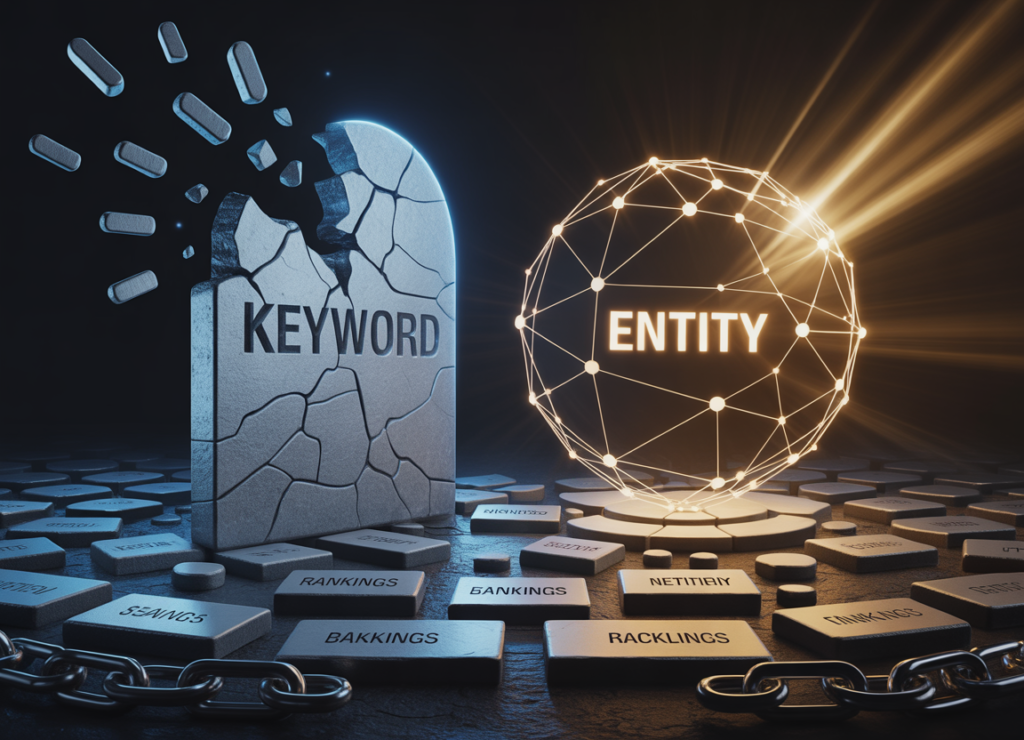
A few years ago, SEO conversations were all about “long-tail keywords.” We would spend hours finding the perfect phrase and placing it carefully in headings and paragraphs.
In 2026, the game looks different.
AI doesn’t just match words anymore. It understands intent. More importantly, it understands entities.
An entity is simply something clearly identifiable — a person, a company, a product, a place, or even a specific concept. Instead of just recognizing the word “CRM,” search systems now recognize brands like Salesforce or HubSpot as distinct entities. They also understand how those brands connect to ideas like SaaS, customer support, automation, or cloud computing.
That shift changes how you should think about optimization.
1. Be visible beyond your website
AI models learn from large volumes of public information. If your brand is only mentioned on your own site, that’s a weak signal. But if people are talking about you on Reddit, referencing you in industry podcasts, reviewing you on comparison sites, or mentioning you in niche blogs, those repeated signals add up.
Over time, AI systems start to “see” your brand as established and credible. You’re no longer just a website. You become a recognized entity within your industry.
2. Be clear about who you are
This is where many brands get it wrong. Vague claims like “innovative solutions for modern businesses” don’t help anyone — especially not AI systems trying to understand context.
Clarity wins.
Instead of broad marketing language, say exactly what you do and who it’s for. For example:
“Our software is a specialized project management tool built specifically for architectural firms.”
That kind of statement removes confusion. It tells both humans and AI exactly where you fit in the ecosystem.
In short, optimization today is less about repeating phrases and more about building a clear, consistent identity. When your brand is well-defined, frequently mentioned, and connected to the right topics, AI doesn’t just index you.
It understands you.
3. Information Gain: The Secret Ranking Factor
One of the biggest mistakes marketers are making right now is using AI as a shortcut. They take a top-ranking article, ask a tool to rewrite it, tweak a few sentences, and publish it as “new” content.
The problem? It’s not new at all.
If your blog post says the same thing as the top 10 results on Google — just phrased differently — why would an AI system ever reference you? From its perspective, you’re not adding anything meaningful to the conversation.
In 2026, the real differentiator is something called Information Gain.
Put simply, Information Gain is about contribution. How much fresh value does your content add to what already exists online? If you’re repeating what’s already been said, your gain is close to zero. But if you bring something original to the table, your visibility increases — not just in search rankings, but in AI-generated answers as well.
Here are practical ways to increase Information Gain:
1. Publish your own data
Instead of quoting the same statistics everyone else uses, create your own. Run a survey. Analyze customer behavior. Share internal performance trends (without revealing sensitive details). When the data is yours, no one else can replicate it. That makes your content unique by default.
2. Share real case studies
Talk about actual projects. Show what didn’t work before you found the right solution. Break down the steps you took. Include measurable results.
AI systems can summarize general advice, but they can’t invent your specific experience. Real stories, real numbers, and real lessons learned instantly make your content more valuable.
3. Offer thoughtful, evidence-backed opinions
Most AI-generated summaries lean toward the general consensus. But they also recognize well-supported alternative viewpoints. If you disagree with a popular strategy, explain why. Back it up with reasoning, examples, or data.
Strong opinions aren’t the goal — well-argued insights are.
At the end of the day, the brands that stand out aren’t the ones publishing the most content. They’re the ones contributing something different.
In a world where AI can rephrase almost anything, originality isn’t optional anymore.It’s your competitive edge.
4. The “E” in E-E-A-T: Why Experience Wins

If you look at Google’s search quality guidelines, you’ll notice a strong focus on E-E-A-T: Experience, Expertise, Authoritativeness, and Trustworthiness.
In 2026, that first word — Experience — matters more than ever.
There’s a simple reason for this.
AI can explain almost anything. It can give you steps, frameworks, definitions, and checklists in seconds. But what it cannot truly replicate is lived experience. It hasn’t tested strategies, lost money, dealt with client pressure, or fixed real-world mistakes.
That’s where you win.
Think about these two headlines:
- “How to Set Up a Facebook Ad Campaign”
- “I Spent $50,000 on Facebook Ads Last Month — Here’s Exactly What Failed”
The first one is helpful, but it’s generic. Hundreds of similar articles already exist.
The second one instantly feels different. It signals that the writer has actually been in the trenches. There’s risk, data, and personal accountability behind it. Even before reading the article, you expect specifics — numbers, mistakes, lessons learned.
And that’s exactly what search systems are looking for.
When AI tools scan the web to find reliable sources, they don’t just look for polished explanations. They look for signals of real-world involvement. Clear proof that someone has actually done the thing they’re writing about.
So instead of publishing another surface-level guide, ask yourself:
- What have I personally tested?
- What did I try that didn’t work?
- What numbers can I share?
- What mistakes did I make that others can avoid?
Those details build trust. They show depth. They make your content harder to ignore.
In an AI-driven world where explanations are cheap, experience becomes your unfair advantage.
5.Optimizing for “Answerability” (The Q&A Framework)

Generative search engines don’t behave like traditional search results pages. They respond the way people talk — in questions, answers, and clear explanations.
If you want your content to show up in those responses, it needs to feel like part of that conversation.
Write headers the way people actually ask questions
A vague heading like “Pricing” doesn’t say much. It forces both readers and AI systems to guess what’s inside.
Now compare that to:
“How much does [Service Name] cost in 2026?”
That second version mirrors a real search query. It sounds like something a person would type into Google or ask an AI assistant. When your headers match natural questions, your content becomes easier to understand and easier to surface in conversational answers.
Add a short summary at the top
Long-form content is still powerful. But attention spans are short — and AI systems prefer clear, compact insights.
Start your article with a short three-sentence summary. Think of it as the quick takeaway for busy readers. This small section often becomes the most “pullable” part of your content because it delivers value fast and without fluff.
If someone only reads those three sentences, they should still walk away with clarity.
Structure matters more than ever
Walls of text are difficult for both humans and machines to process. Structured content wins.
Use:
- Bullet points for key ideas
- Numbered steps for processes
- Comparison tables when evaluating products
- Clear subheadings to break down sections
For example, if you’re comparing two tools, don’t bury the differences inside long paragraphs. A simple table outlining features, pricing, pros, and cons makes the information instantly digestible.
AI systems naturally gravitate toward well-organized information because it’s easier to extract and summarize accurately.
In short, write like you’re answering someone directly. Be clear. Be structured. Be specific.
When your content feels like a helpful conversation instead of a textbook, both people — and AI — respond better.
6. Measuring Success: The New KPIs
For a long time, measuring SEO was straightforward. You picked a keyword, watched your ranking, and if you climbed from page two to the top three results, you knew you were doing something right.
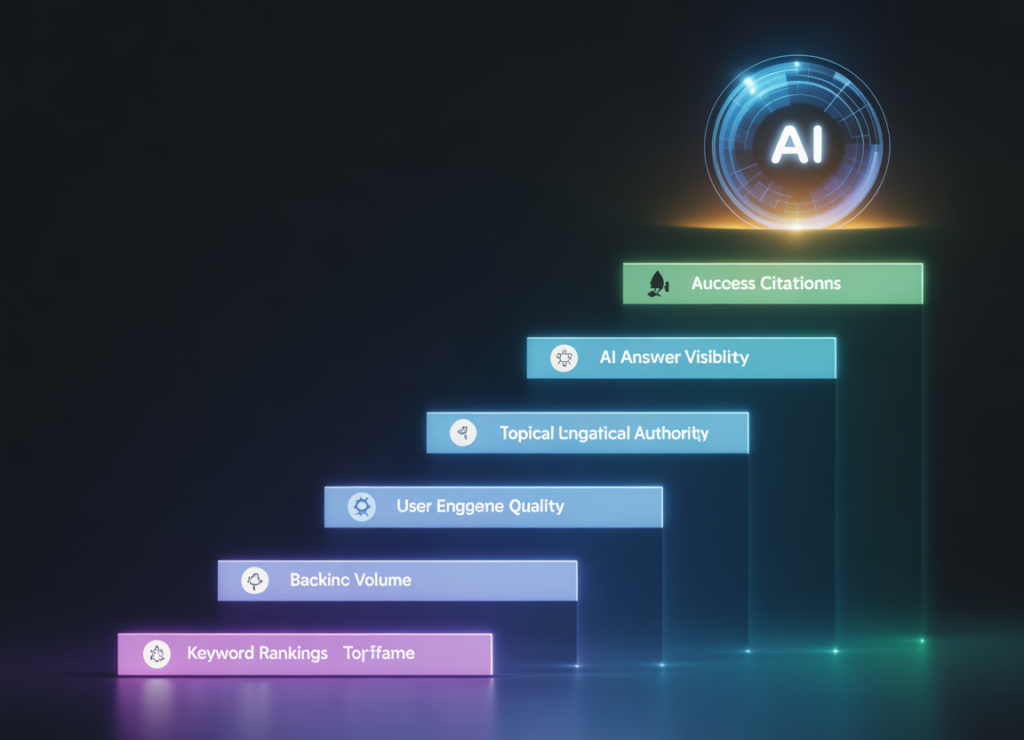
That approach still has value — but it’s no longer enough.
In 2026, many users don’t scroll through search results the way they used to. They ask a question and get a direct answer from an AI tool. Sometimes they never even visit a traditional search results page. That shift changes how we measure success.
If you’re focusing only on keyword positions, you’re missing a big part of the story.
Here’s what actually matters now.
1. Share of Model (SoM)
Instead of obsessing over “Are we ranking #1?”, start asking a different question:
“When someone asks an AI about our space, does our brand show up in the answer?”
That visibility inside AI-generated responses is your Share of Model.
For example, imagine someone asks, “What’s the best project management software for architects?” If your competitor is consistently mentioned and you’re not — even though your site ranks well on Google — you’re losing mindshare in a place that’s quickly becoming the first touchpoint.
It’s no longer just about appearing in search results. It’s about being included in the recommendation itself.
2. Citation Traffic
Some AI platforms provide source links below their answers. When someone clicks through to your website from those citations, that traffic is different from traditional organic traffic.
Why?
Because the user has already read a summary. They’ve seen context. They’re clicking because they want depth — and they’ve chosen you as the source to trust.
Tracking this kind of traffic tells you something important: AI systems consider your content strong enough to reference publicly. That’s a credibility signal, not just a visit.
3. Brand Sentiment in AI Responses
This is where things get interesting.
When AI describes your company, what tone does it use?
Does it frame you as budget-friendly or high-end?
Cutting-edge or outdated?
Dependable or inconsistent?
AI models don’t invent these impressions. They reflect patterns they’ve picked up across reviews, blog posts, forums, and comparisons. If the web consistently associates your brand with certain strengths — or weaknesses — that language can appear in AI summaries.
Paying attention to this helps you understand how your reputation is forming at scale.
The reality is simple: in 2026, visibility isn’t just about position on a page. It’s about presence in answers.
Rankings still play a role.
But being mentioned, being cited, and being described positively inside AI responses — that’s where the real competitive edge lies now.
7. Conclusion: Don’t Fight the Future, Optimize for It

There’s a lot of noise online about SEO “dying.” The truth is much simpler: it’s evolving.
SEO isn’t disappearing. It’s shifting. Instead of living only on search results pages, it’s moving deeper — into the decision-making layer of AI systems that now answer questions directly.
Before, the goal was simple: get to the top of the page and earn the click.
Now, the goal is bigger: become the brand that AI feels confident recommending.
That’s what Generative Engine Optimization is really about. It’s not just traffic chasing. It’s reputation building. It’s about creating content and signals strong enough that when an AI system scans the web for trustworthy sources, your name naturally rises to the surface.
And here’s the key difference:
In the past, you could sometimes win by playing the numbers game — more backlinks, more pages, more keyword variations.
In 2026, that alone won’t carry you.
The brands that stand out will be the ones offering something others can’t easily copy:
- Original insights
- Clear, verifiable data
- Real-world experience
- Honest perspectives
AI systems are designed to identify patterns of trust and value. If your content consistently demonstrates depth, clarity, and authenticity, you’re not just optimizing for an algorithm — you’re building long-term credibility.
The winners won’t necessarily be the loudest.
They’ll be the most useful.
Because in an AI-driven world, usefulness is what earns the recommendation.